
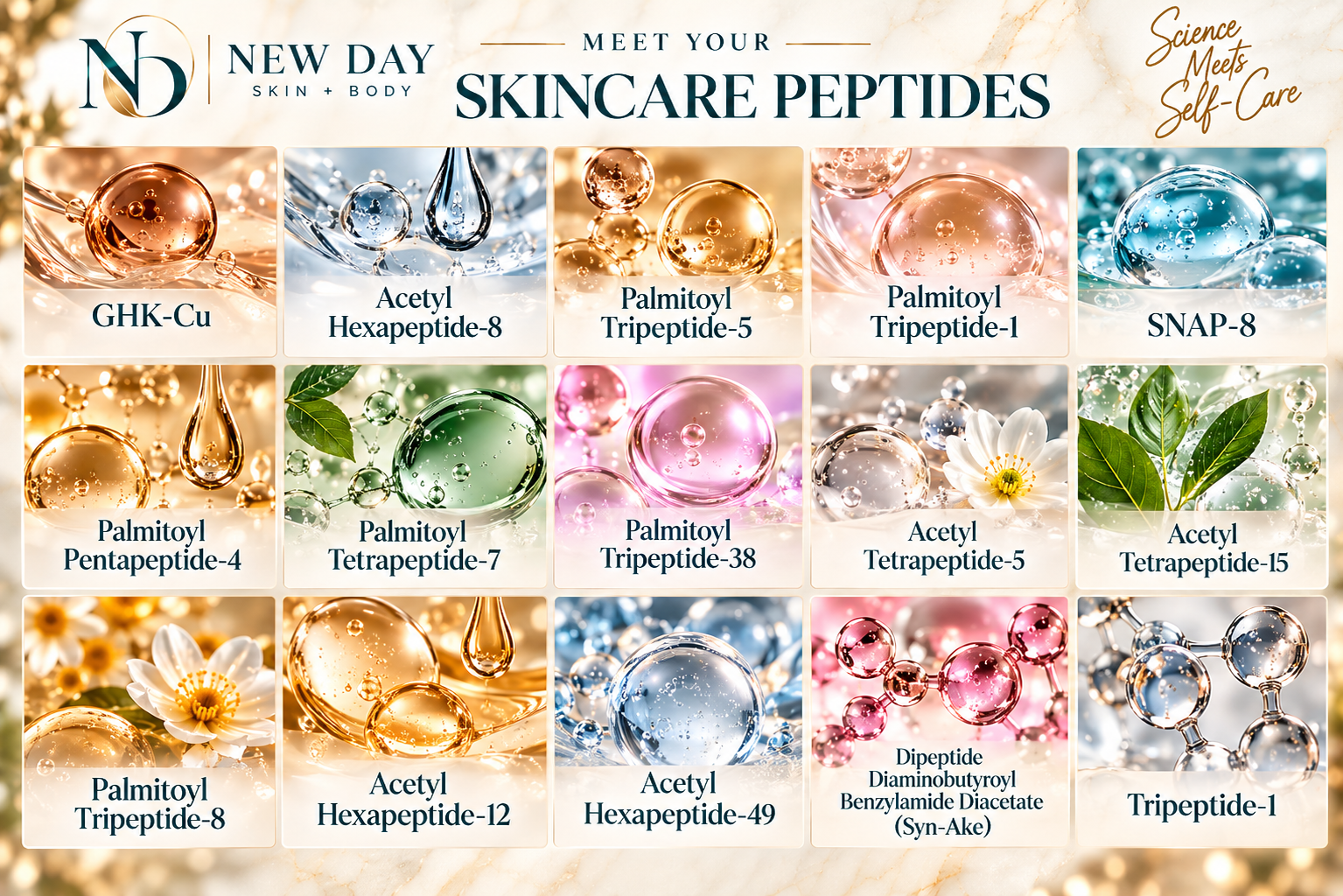
A New Day Skin + Body Educational Guide
Science + Self-Care + Real Life
Skin, Renewed. Self, Remembered.
Beautiful Skin Begins With Understanding
Walk into almost any skincare store today, and you'll see one word appearing on everything from serums and moisturizers to eye creams and facial treatments.
Peptides.
They're in the products promising smoother-looking skin, improved firmness, fewer visible fine lines, and a more radiant complexion.
But what exactly are peptides? Are they all the same? And how do you know which ones make sense for your skin?
At New Day Skin + Body, I believe understanding what you're putting on your skin is just as important as the products themselves.
I love beautiful formulations, luxurious textures, and thoughtfully selected ingredients. But I also believe skincare shouldn't require a chemistry degree—or a bathroom counter overflowing with products.
That's why we're introducing you to the fascinating world of cosmetic peptides.
Not to overwhelm you with scientific terminology, but to help you understand what these ingredients are, why they're used, and what they may contribute to a purposeful skincare routine.
Because the science matters. But so does the woman using it.
First, What Exactly Is a Peptide?
Peptides are short chains of amino acids, the building blocks of proteins.
Within the human body, different peptides participate in biological processes ranging from cellular communication to tissue maintenance.
In skincare, certain peptides are incorporated into cosmetic formulations because of their potential to support the appearance and condition of the skin.
Some are studied for their involvement in collagen-related pathways. Others are developed for the appearance of expression lines, skin comfort, texture, or elasticity.
And here's something important: Not all peptides do the same thing.
Their effects depend on their chemical structure, concentration, formulation, delivery into the skin, and the quality of supporting research.
Understanding those differences can help you make more informed skincare choices.
Meet Your Peptides
1. GHK-Cu — Copper Tripeptide-1
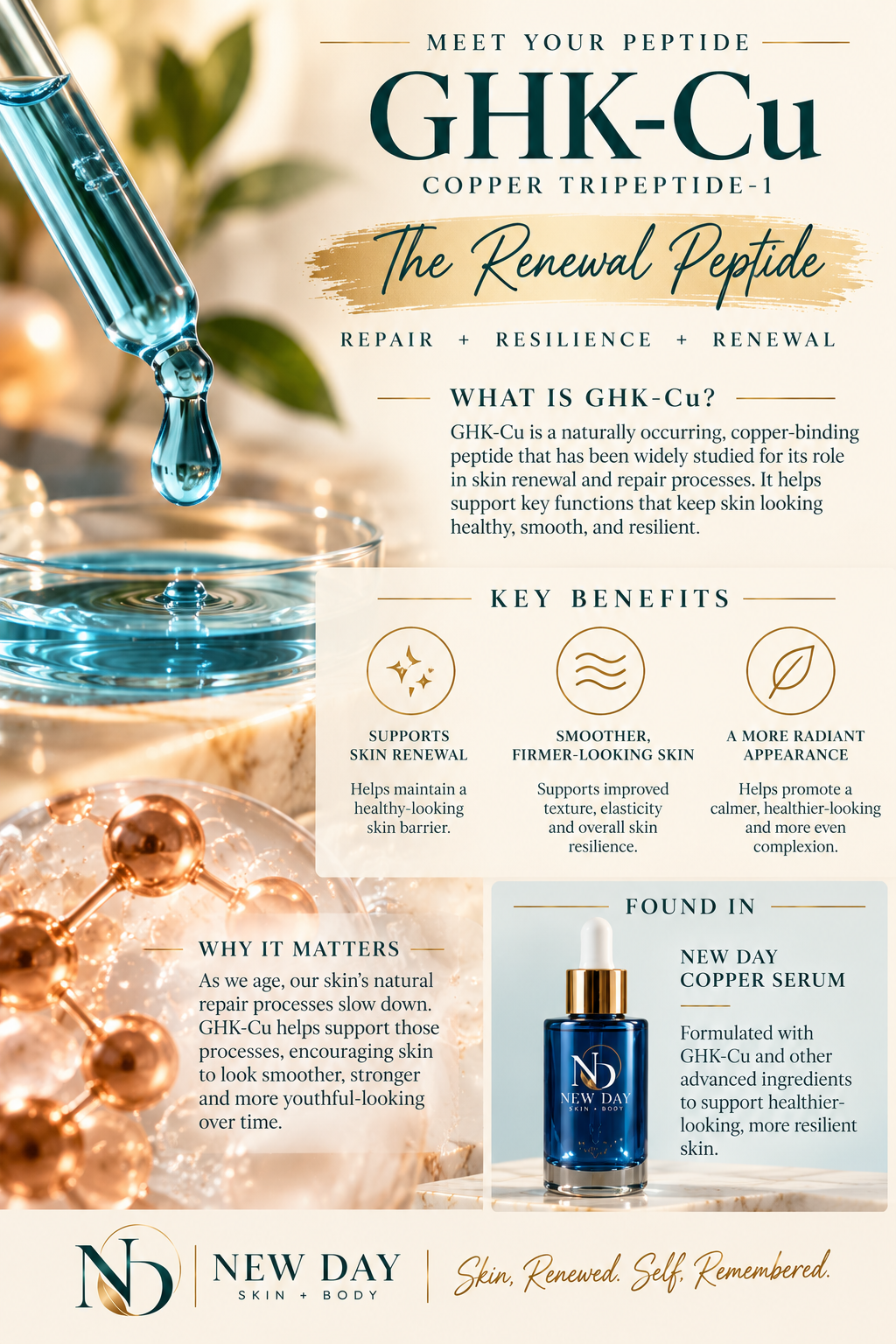
The Renewal Peptide
Renew • Support • Revitalize
GHK-Cu is a naturally occurring copper-binding peptide that has attracted considerable research interest for its involvement in tissue maintenance, extracellular-matrix biology, and skin-related processes.
In cosmetic skincare, it is used in formulations focused on improving the appearance of skin firmness, texture, and resilience.
Why it's used:
Supports smoother, firmer-looking skin.
Helps promote a more resilient-looking complexion.
Is studied for its role in skin renewal and extracellular-matrix signaling.
Why it matters: As our skin changes with age and environmental exposure, maintaining its appearance, texture, and resilience becomes increasingly important.
GHK-Cu offers an interesting connection between biological research and modern cosmetic formulation.
New Day connection: Copper Serum and other formulas that specifically identify Copper Tripeptide-1.
2. Acetyl Hexapeptide-8 — Argireline
The Expression-Line Peptide
Smooth • Soften • Refresh
Smiling, laughing, squinting, and raising our eyebrows are all part of being human.
Over time, repeated facial movements can contribute to the appearance of expression lines.
Acetyl Hexapeptide-8 is a synthetic cosmetic peptide studied for its potential influence on pathways associated with facial-expression lines.
Why it's used:
Helps soften the appearance of fine expression lines.
Supports smoother-looking skin.
Is commonly included in forehead and eye-area formulations.
Why it matters: Expression lines are part of a life fully lived. The goal isn't to eliminate expression, but to support skin that looks smooth and refreshed.
Importantly, topical Argireline is not equivalent to injectable botulinum toxin, and its cosmetic effects are generally more modest.
3. Palmitoyl Tripeptide-5
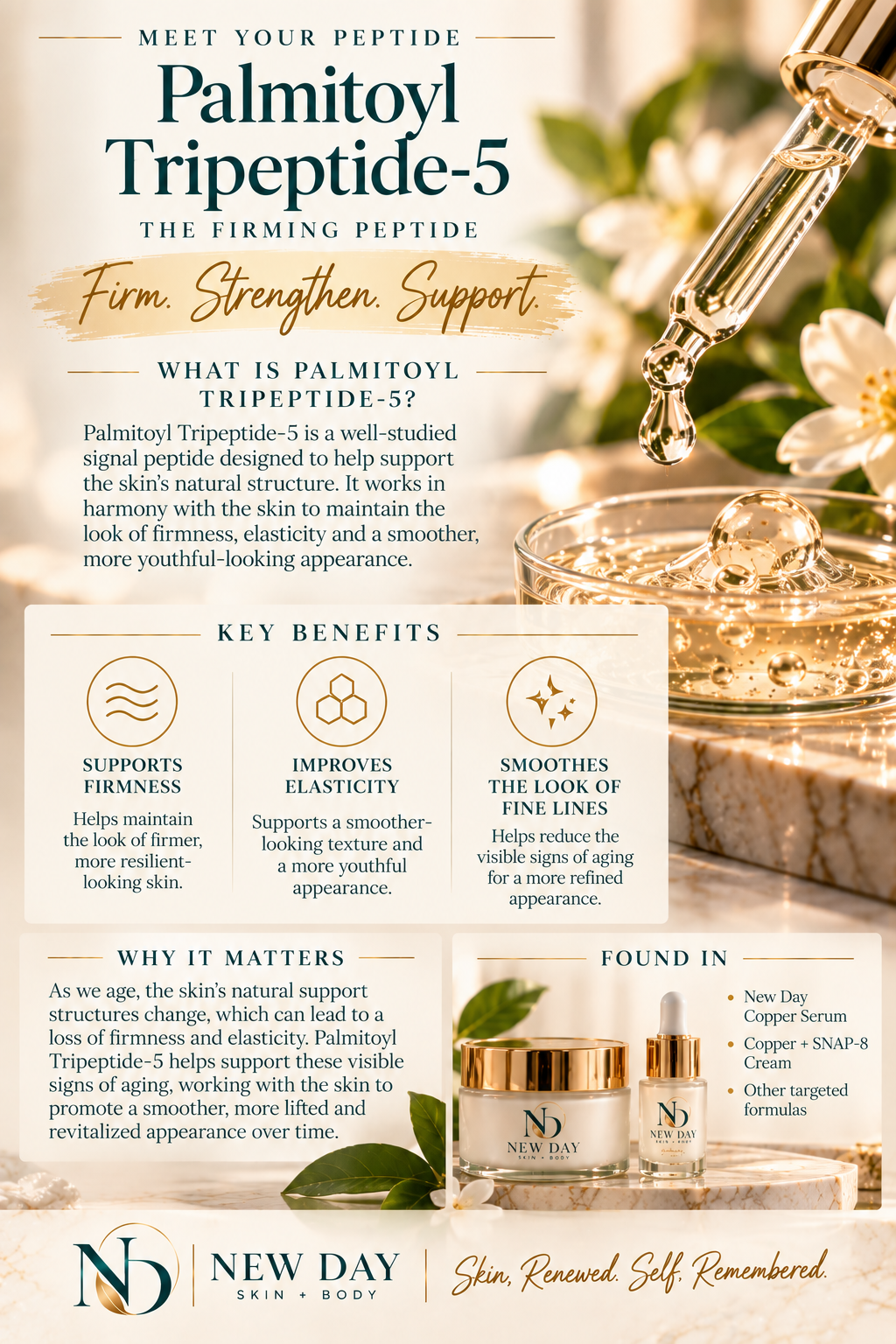
The Firming Peptide
Firm • Smooth • Support
Palmitoyl Tripeptide-5 is a synthetic signal peptide used in skincare formulations focused on firmness and elasticity.
It has been investigated for its relationship to pathways involved in collagen regulation.
Why it's used:
Supports the appearance of firmer skin.
Helps improve the look of elasticity.
Is used in formulas targeting visible fine lines and uneven texture.
Why it matters: Skin naturally changes over time. Its supportive structures, elasticity, and texture can gradually become less pronounced.
Peptides such as Palmitoyl Tripeptide-5 are incorporated into cosmetic formulations designed to address some of those visible changes.
4. Palmitoyl Tripeptide-1
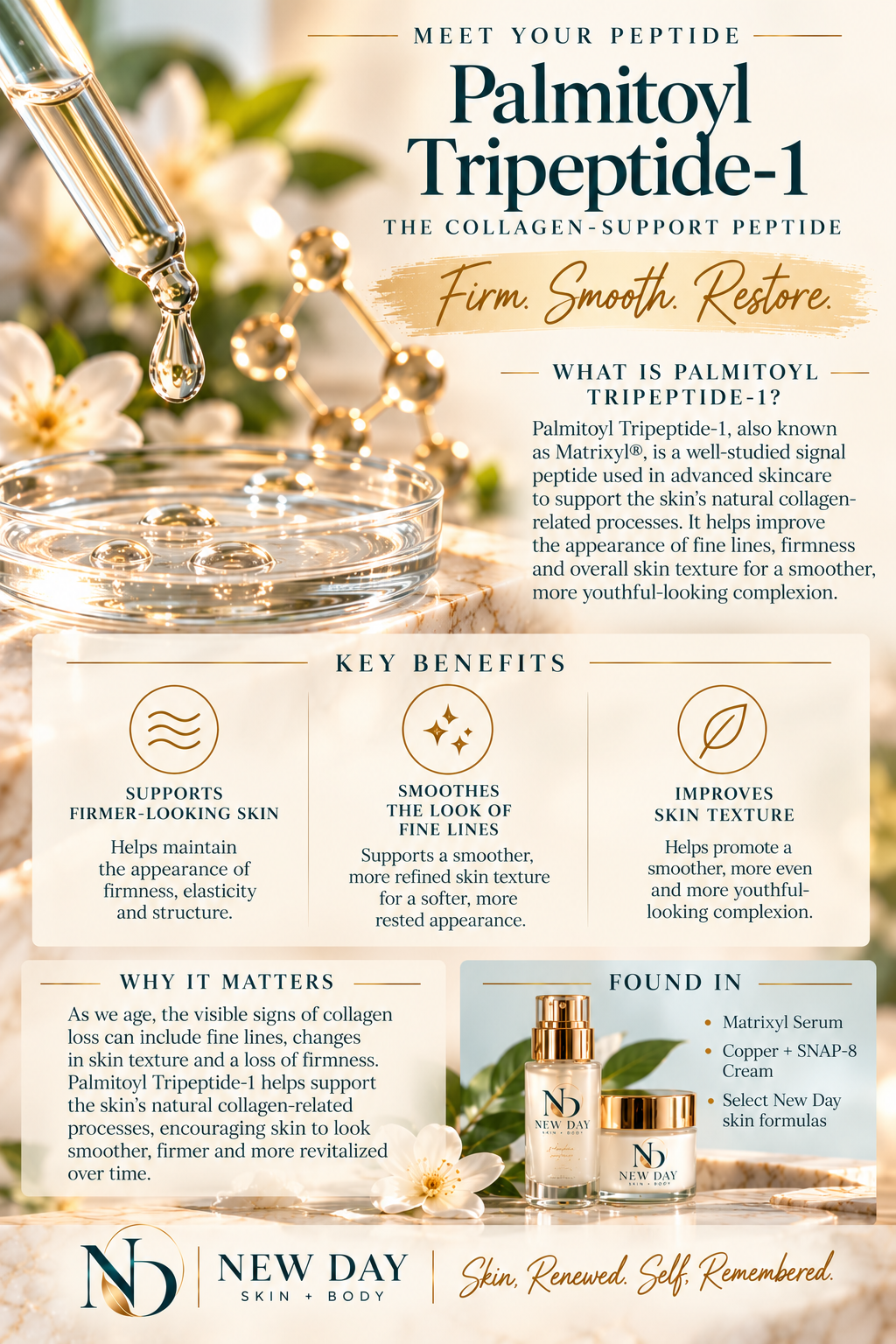
The Collagen-Support Peptide
Firm • Smooth • Condition
Palmitoyl Tripeptide-1 is a signal peptide related to the GHK amino-acid sequence.
It is frequently associated with the Matrixyl family of cosmetic ingredients and is used in formulations focused on collagen-related skin processes.
Why it's used:
Supports firmer-looking skin.
Helps improve the appearance of fine lines.
Contributes to formulations targeting texture and skin resilience.
Why it matters: Collagen is an important structural protein within the skin.
Although applying a peptide doesn't automatically increase collagen production, research into these signaling ingredients has helped shape modern cosmetic skincare.
Ingredient note: Palmitoyl Tripeptide-1 is associated with certain Matrixyl complexes; it should not be confused with Palmitoyl Pentapeptide-4, the original Matrixyl peptide.
5. SNAP-8 — Acetyl Octapeptide-3
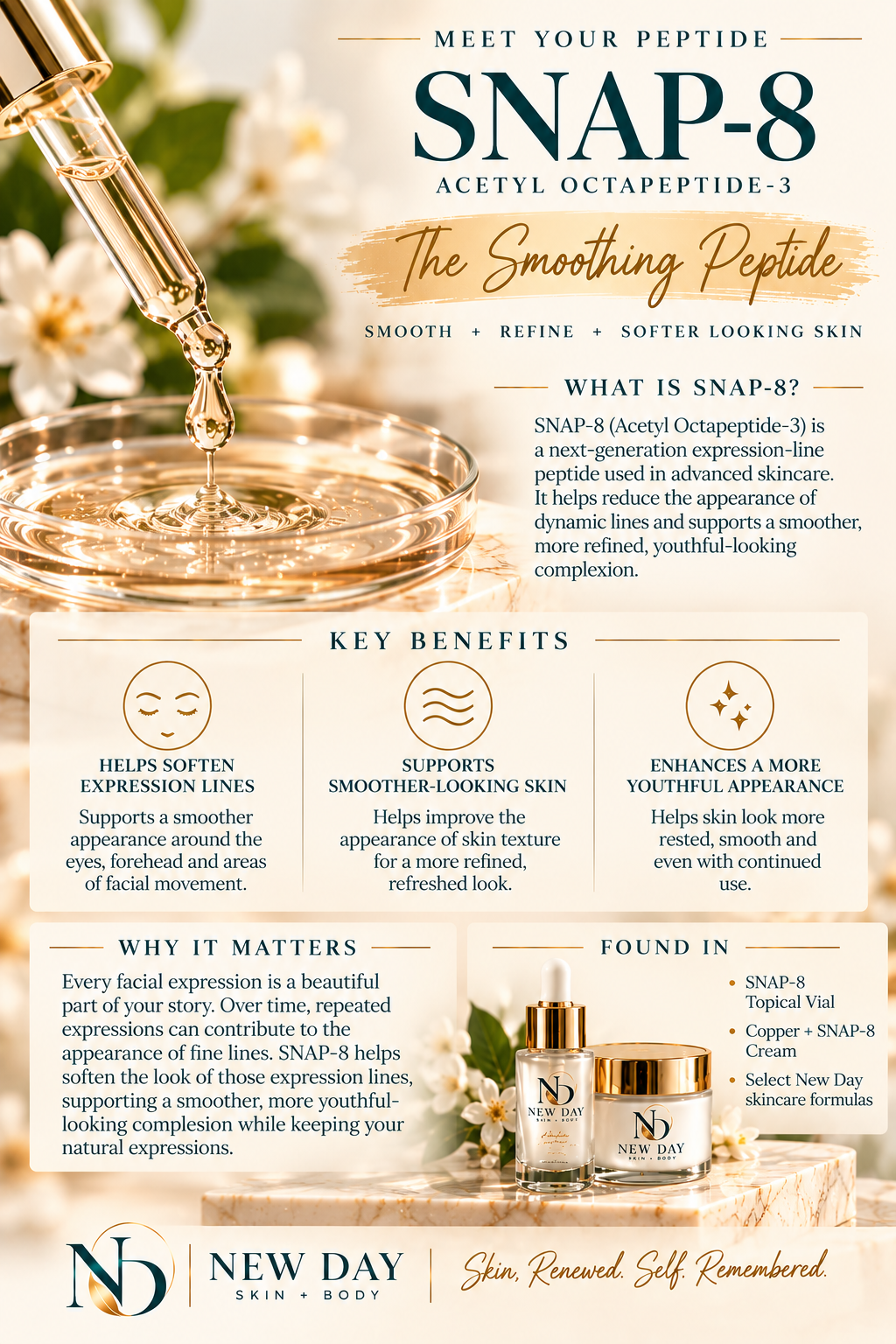
The Smoothing Peptide
Smooth • Refine • Soften
SNAP-8 is a synthetic cosmetic peptide developed for formulations addressing the appearance of expression-related fine lines.
Its proposed mechanism involves pathways associated with neurotransmitter release, although laboratory mechanisms do not necessarily translate into the same effects in human skin.
Why it's used:
Helps soften the appearance of expression lines.
Supports smoother-looking skin.
Is commonly marketed in advanced expression-line formulations.
Why it matters: Repeated facial movement is natural, and so are the lines that can develop over time.
SNAP-8 represents one approach researchers have explored for supporting a smoother cosmetic appearance without changing the beauty of natural expression.
6. Palmitoyl Pentapeptide-4 — Matrixyl
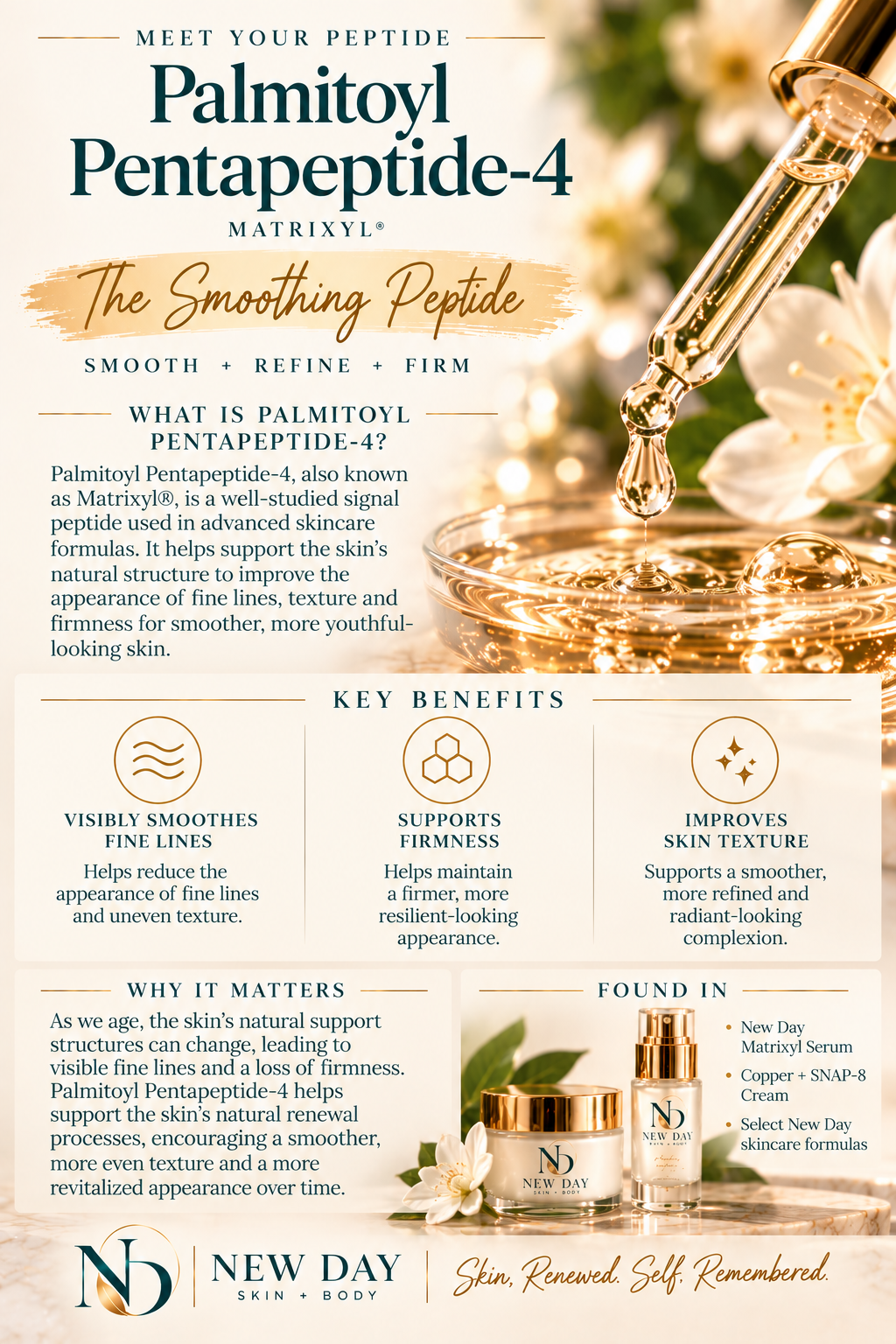
The Smoothing Peptide
Smooth • Refine • Firm
Palmitoyl Pentapeptide-4 is one of the classic peptides associated with the development of modern peptide skincare.
Known commercially as Matrixyl, it has been studied in formulations focused on wrinkles and skin texture.
Why it's used:
Helps improve the appearance of fine lines.
Supports smoother-looking skin.
Is incorporated into formulas targeting firmness and texture.
Why it matters: Visible changes in texture and firmness are common as skin matures.
Palmitoyl Pentapeptide-4 is an established cosmetic ingredient in this category, although the strength of evidence depends on the particular formulation and study.
7. Palmitoyl Tetrapeptide-7
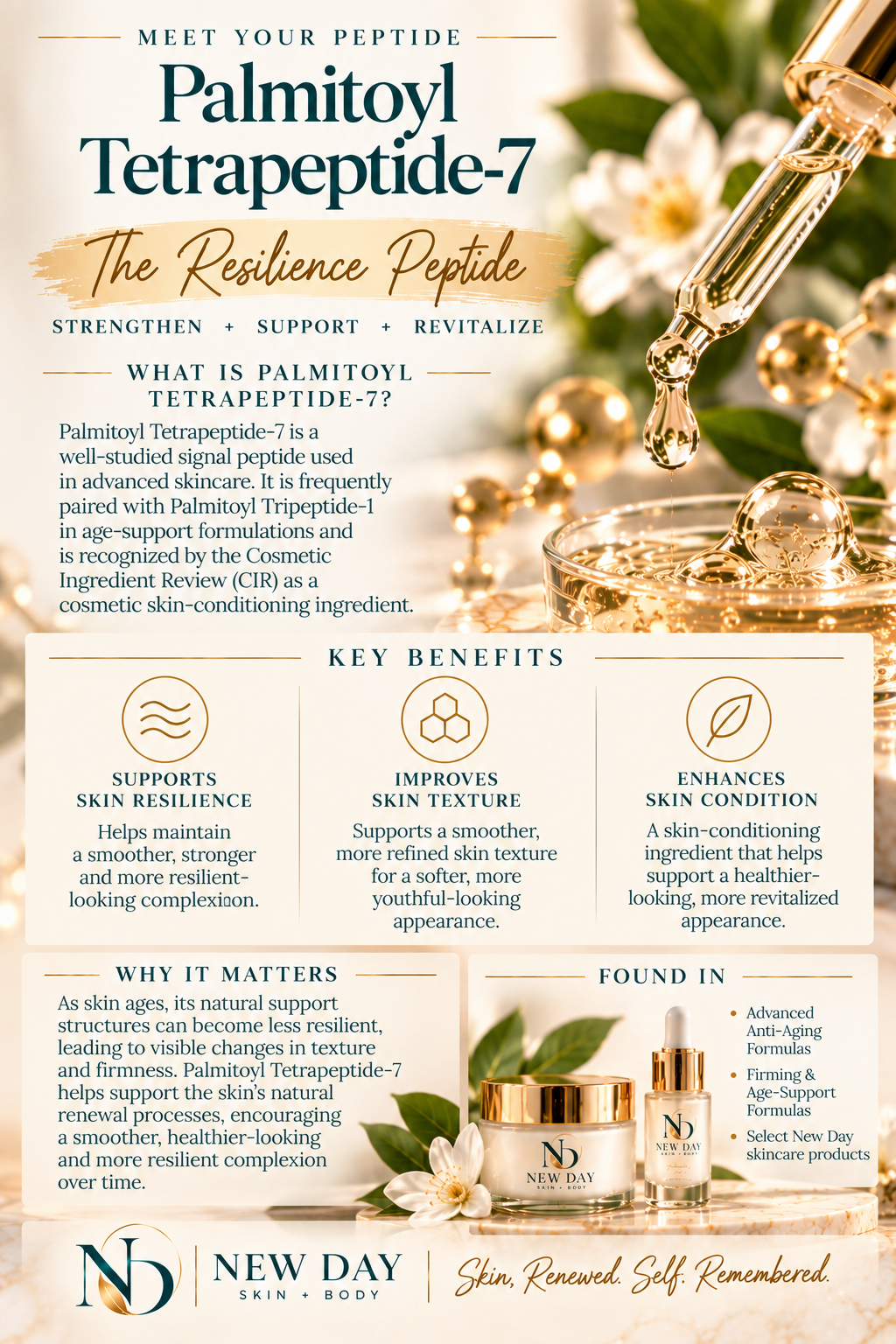
The Resilience Peptide
Condition • Support • Revitalize
Palmitoyl Tetrapeptide-7 is a skin-conditioning peptide frequently paired with Palmitoyl Tripeptide-1 in cosmetic formulations.
Together, these ingredients appear in certain Matrixyl 3000 formulations.
Why it's used:
Supports skin conditioning.
Is incorporated into products for smoother, more resilient-looking skin.
Complements other peptides in age-support formulations.
Why it matters: Healthy-looking skin depends on more than any single ingredient.
Thoughtfully developed formulas may combine different cosmetic peptides with moisturizers, antioxidants, and barrier-supporting ingredients.
Palmitoyl Tetrapeptide-7 is one example of a peptide often used as part of a broader formulation strategy.
8. Palmitoyl Tripeptide-38 — Matrixyl Synthe'6
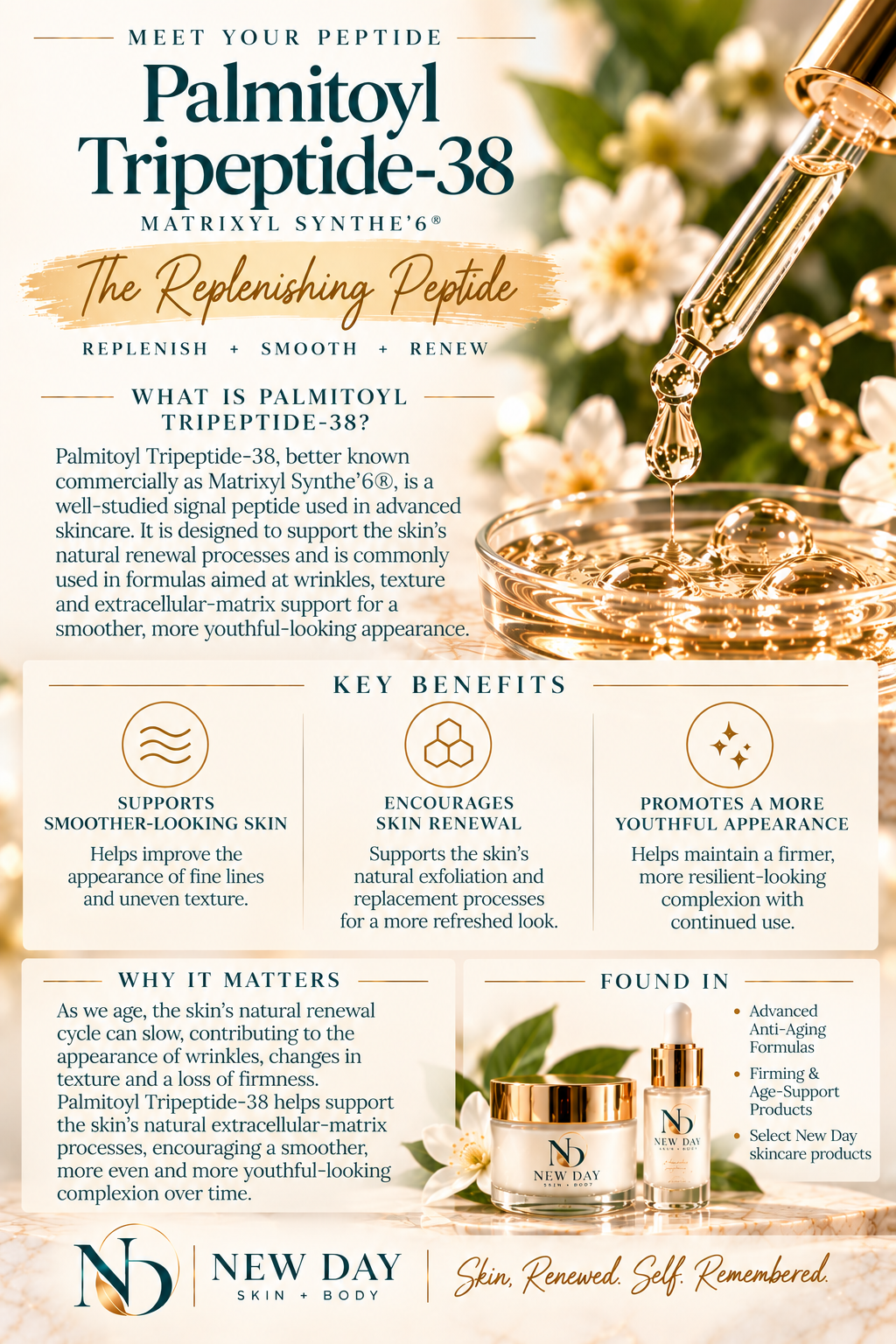
The Replenishing Peptide
Replenish • Smooth • Support
Palmitoyl Tripeptide-38 is a cosmetic signal peptide marketed commercially as Matrixyl Synthe'6.
It has been studied for its potential involvement in extracellular-matrix-related pathways.
The extracellular matrix is the network of structural materials that helps support the skin.
Why it's used:
Targets the appearance of fine lines and wrinkles.
Supports smoother-looking texture.
Is included in formulas developed around skin firmness and extracellular-matrix support.
Why it matters: Skin texture and firmness reflect many factors, including age, hydration, environmental exposure, and changes in structural proteins.
This peptide is one of several ingredients explored for addressing those visible concerns.
9. Acetyl Tetrapeptide-5
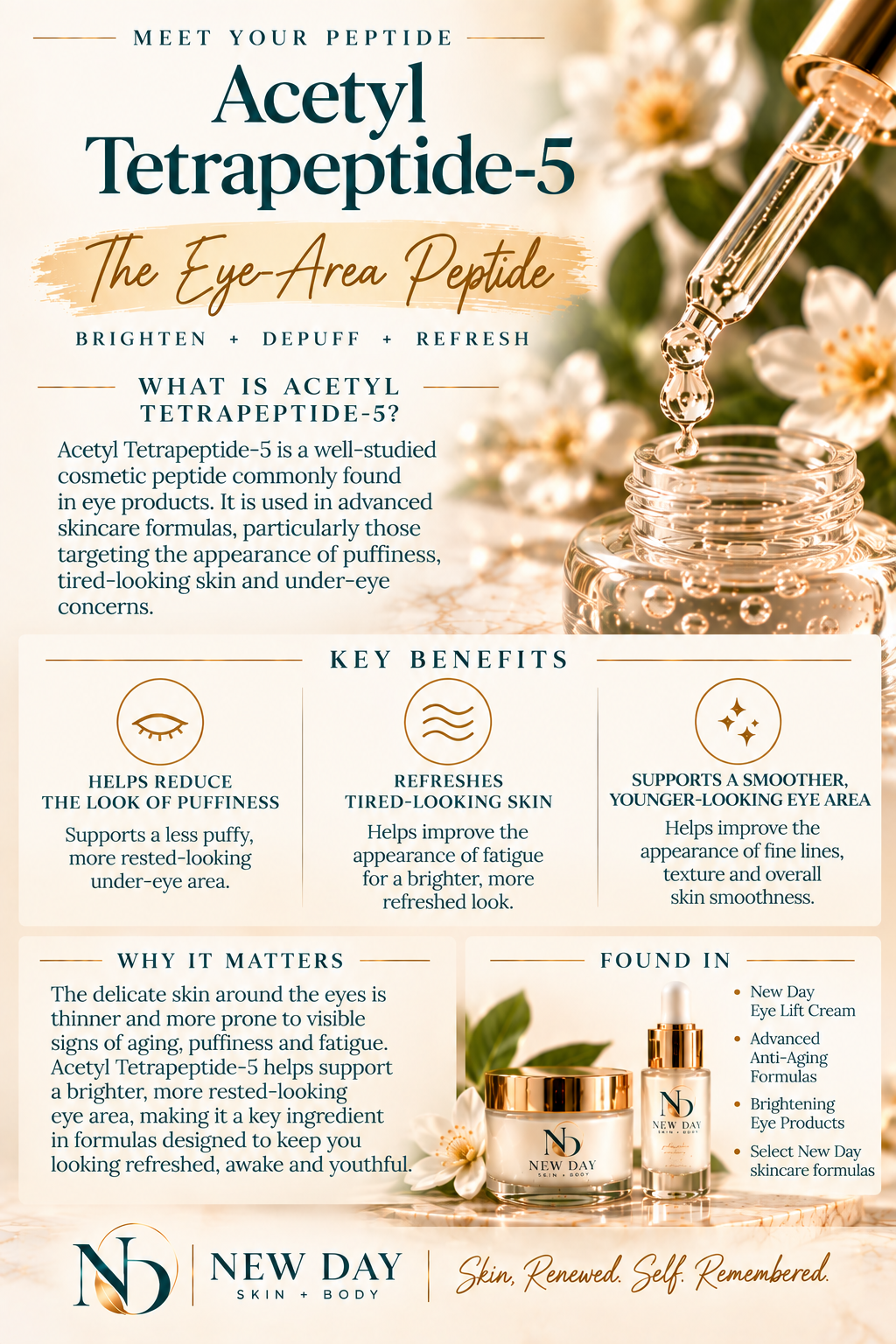
The Eye-Area Peptide
Refresh • Depuff • Revitalize
The skin around our eyes is delicate, and this area often shows visible signs of fatigue, dryness, and puffiness.
Acetyl Tetrapeptide-5 is a cosmetic peptide commonly used in eye-area products, particularly those developed to address the appearance of under-eye puffiness.
Why it's used:
Targets the appearance of puffiness.
Supports a more refreshed-looking under-eye area.
Is included in specialized eye-care formulations.
Why it matters: Under-eye puffiness can have many causes, including sleep, allergies, genetics, and fluid retention.
Cosmetic products may improve its appearance, but they cannot address every underlying cause.
Acetyl Tetrapeptide-5 is one ingredient used in formulas developed for this delicate area.
Peptides for Sensitive and Reactive-Looking Skin
Not every skincare concern involves wrinkles or firmness.
Some women are much more concerned about redness, dryness, sensitivity, and maintaining comfortable-feeling skin.
That brings us to another interesting group of cosmetic peptides.
10. Acetyl Tetrapeptide-15
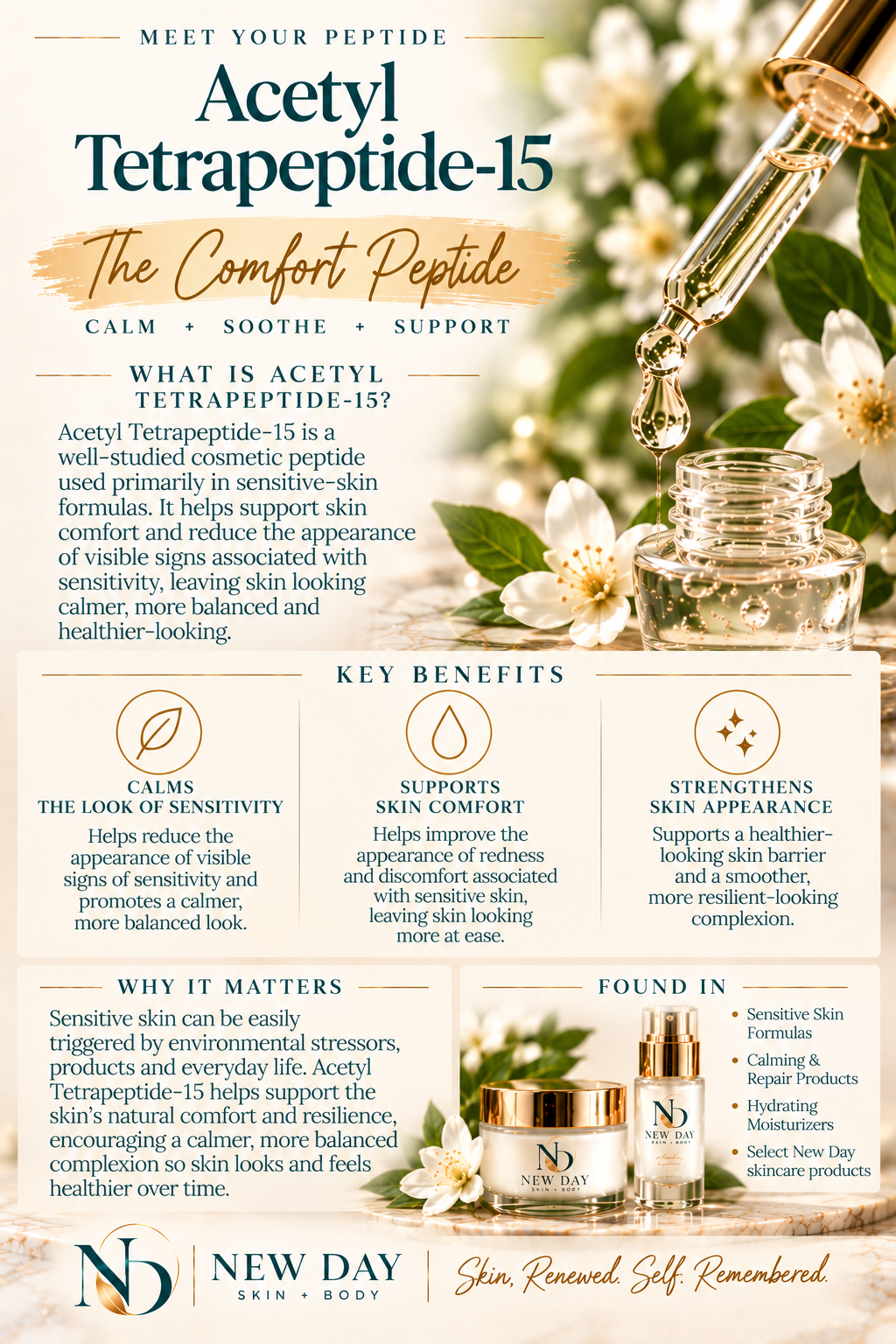
The Comfort Peptide
Calm • Comfort • Support
Acetyl Tetrapeptide-15 is a synthetic peptide used in certain sensitive-skin formulations.
It has been developed around skin-comfort applications and investigated for its potential relationship to sensory responses associated with sensitive skin.
Why it's used:
Is incorporated into sensitive-skin products.
Supports skin-comfort-focused formulations.
Is marketed for reducing the sensation or appearance associated with sensitivity.
Why it matters: Sensitive skin can make even an ordinary skincare routine uncomfortable.
Ingredients designed for this category may be useful, but overall formula gentleness, fragrance content, and barrier-supporting ingredients remain particularly important.
11. Palmitoyl Tripeptide-8
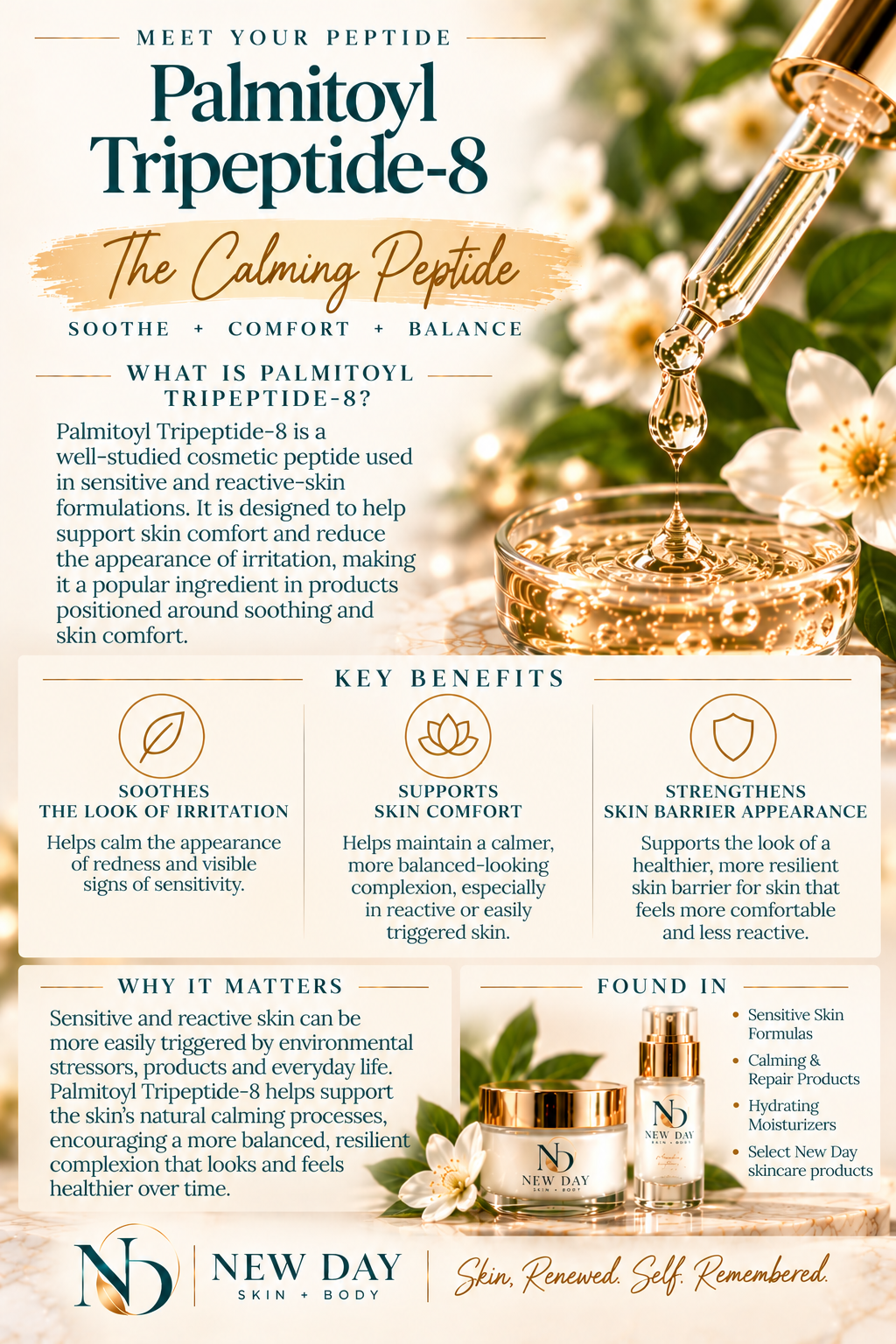
The Calming Peptide
Soothe • Comfort • Balance
Palmitoyl Tripeptide-8 is a cosmetic peptide used in products developed for sensitive or reactive-looking skin.
It has been investigated for its potential influence on pathways associated with skin responses to irritation.
Why it's used:
Is included in formulas targeting visible redness.
Supports products focused on skin comfort.
Is commonly positioned for reactive-looking skin.
Why it matters: Skin can respond to environmental conditions, skincare ingredients, and daily stressors in different ways.
For women whose skin is easily irritated, a gentle and consistent routine may be more beneficial than repeatedly introducing new active ingredients.
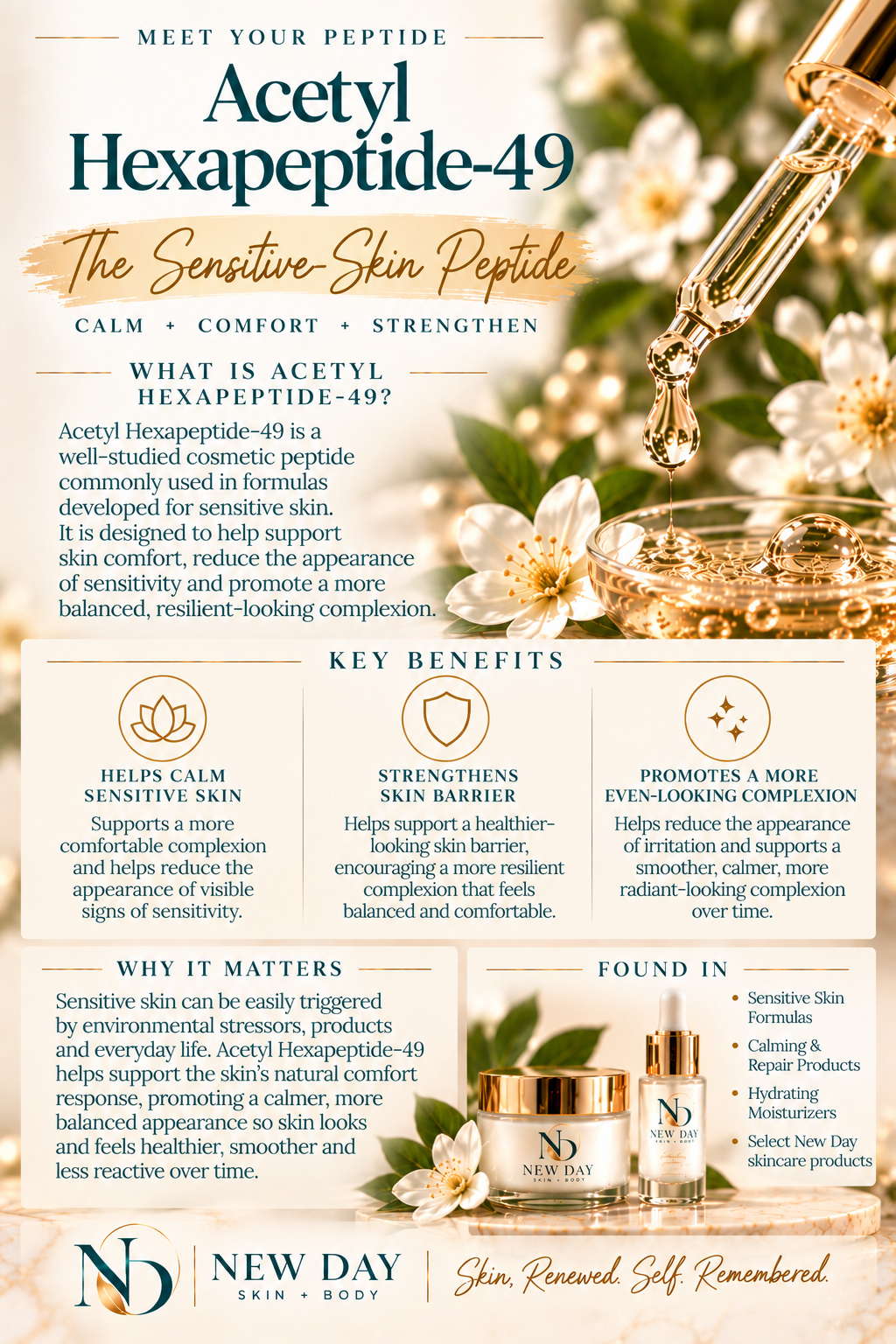
12. Acetyl Hexapeptide-49
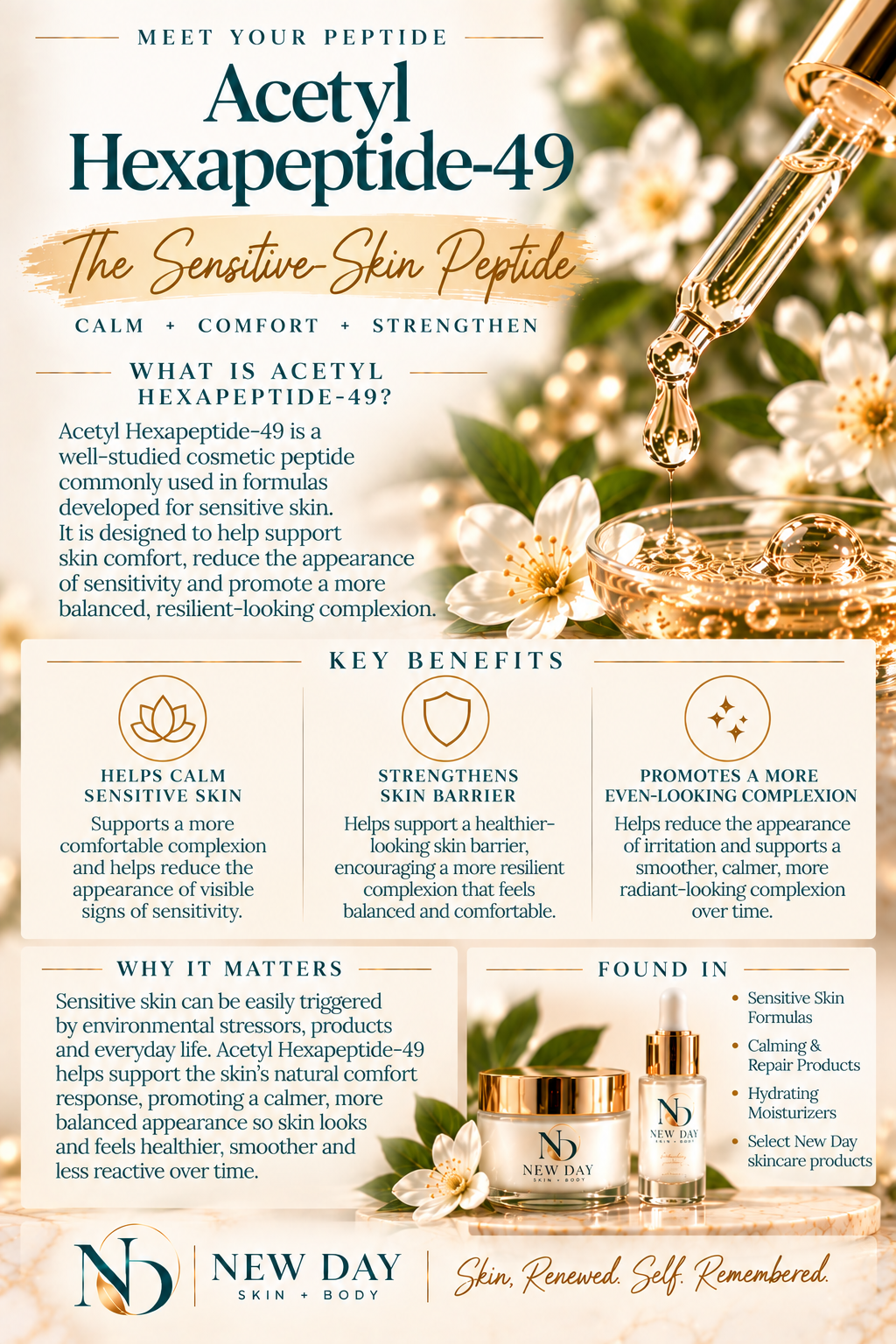
The Sensitive-Skin Peptide
Comfort • Support • Balance
Acetyl Hexapeptide-49 is another synthetic peptide used in cosmetic formulations developed for sensitive skin.
It is marketed for skin-comfort applications, although independent clinical evidence remains limited.
Why it's used:
Appears in sensitive-skin formulations.
Is investigated for skin-comfort-related applications.
May be paired with moisturizers and other skin-conditioning ingredients.
Why it matters: Sensitive skin doesn't always need more products.
Often, the priority is finding a gentle formulation that the skin tolerates consistently.
This peptide belongs to a growing group of specialized cosmetic ingredients developed with those needs in mind.
Additional Peptides for Smoothing, Renewal, and Elasticity
13. Dipeptide Diaminobutyroyl Benzylamide Diacetate — Syn-Ake
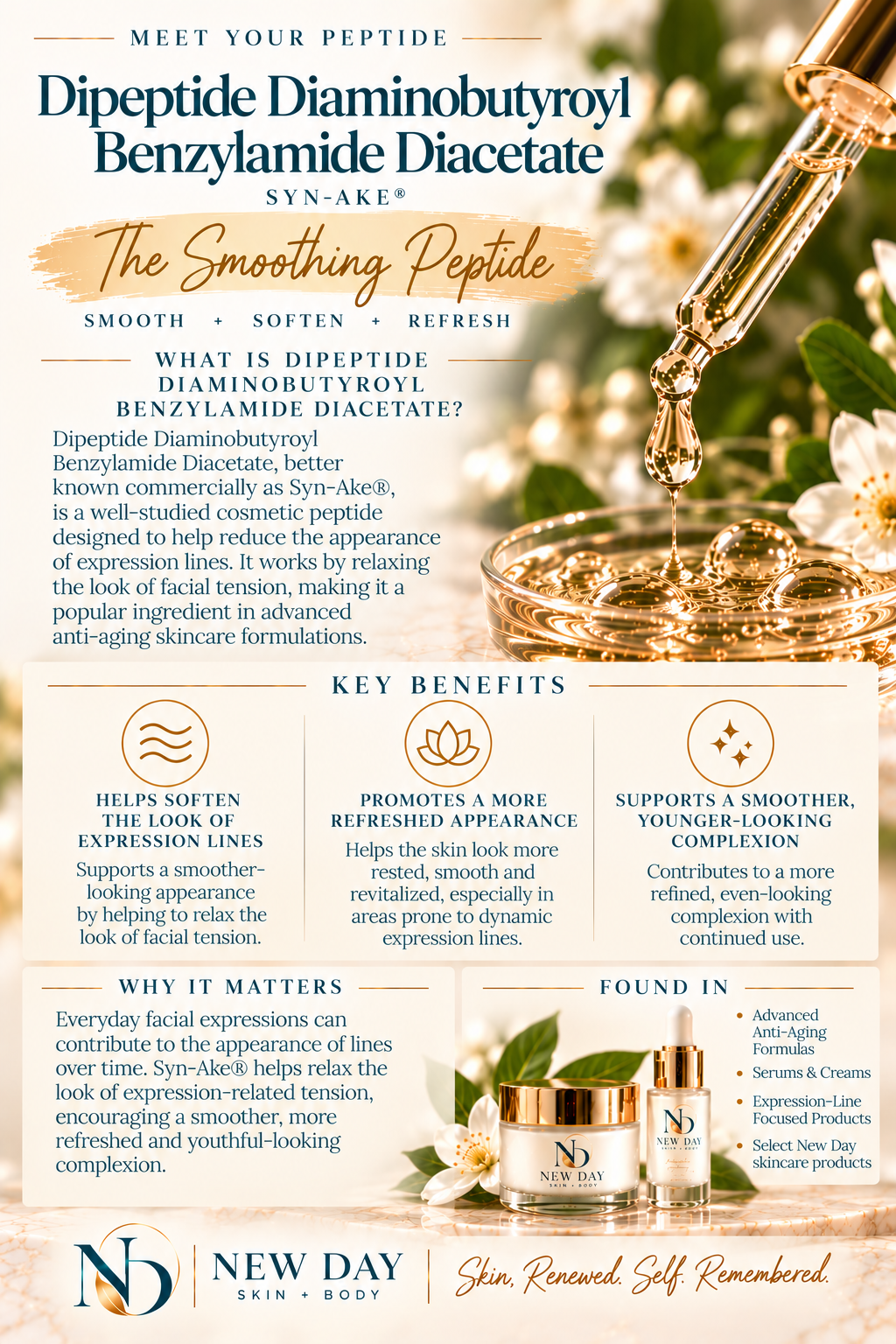
The Smoothing Peptide
Smooth • Soften • Refresh
Syn-Ake is a synthetic cosmetic peptide inspired by research into compounds that influence muscle-related signaling.
It is used in formulations targeting the appearance of expression lines.
Why it's used:
Is marketed for smoothing the appearance of expression lines.
Supports products designed for a more refined-looking complexion.
Appears in targeted cosmetic smoothing formulas.
Why it matters: Syn-Ake is an interesting example of how cosmetic scientists investigate biological mechanisms when developing ingredients.
However, it is not equivalent to snake venom treatment or injectable muscle-relaxing medications, and strong independent clinical evidence for topical results is limited.
14. Tripeptide-1
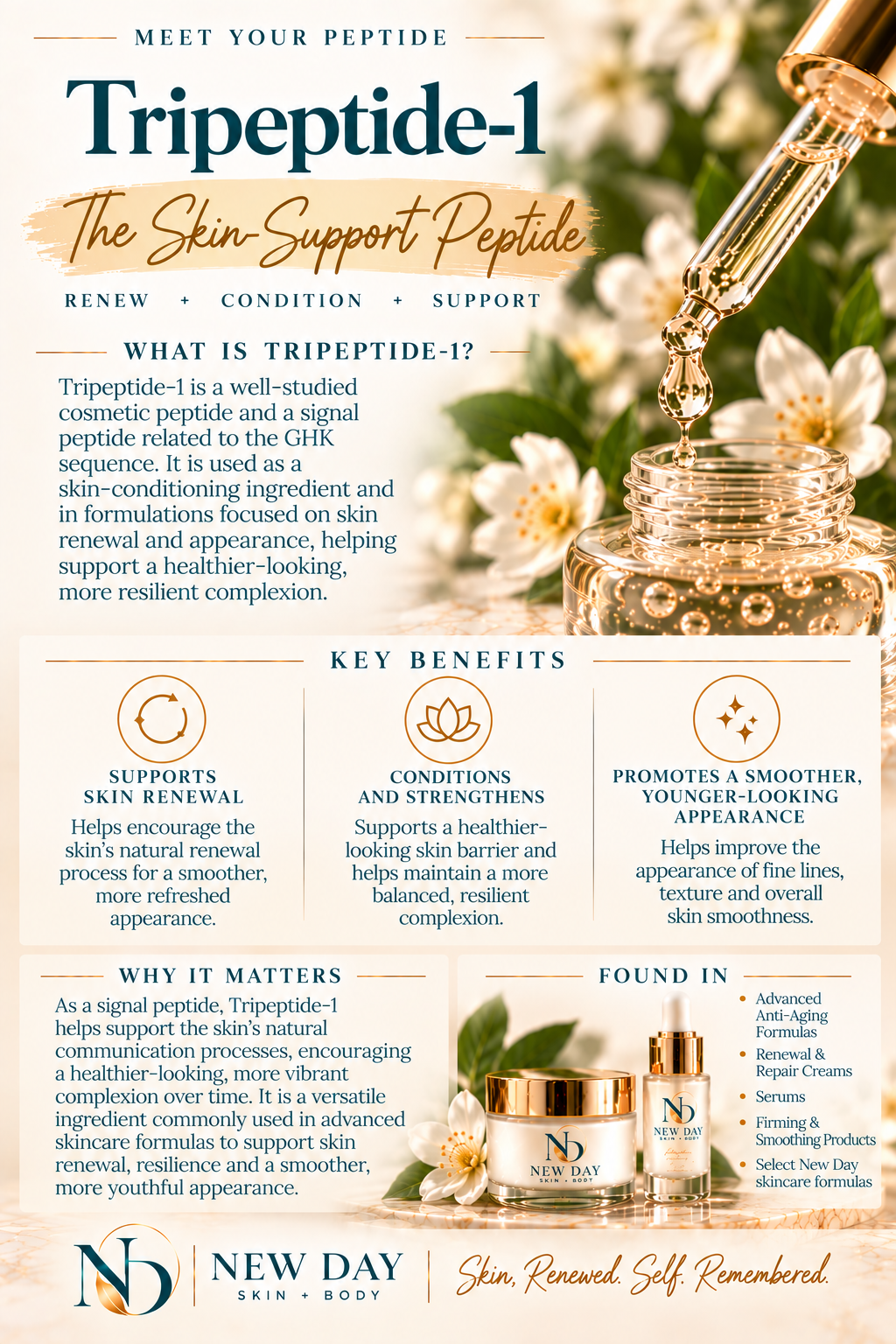
The Skin-Support Peptide
Renew • Condition • Support
Tripeptide-1 is a short peptide related to the naturally occurring GHK sequence.
It is used as a skin-conditioning ingredient and appears in formulations focused on skin appearance and renewal.
Why it's used:
Supports skin-conditioning formulations.
Is used in products targeting smoother-looking texture.
Is associated with research into skin-related signaling processes.
Why it matters: Small peptides can have distinct biological properties depending on their structure and formulation.
Tripeptide-1 is part of the broader family of ingredients researchers have explored for supporting the skin's appearance.
15. Palmitoyl Hexapeptide-12
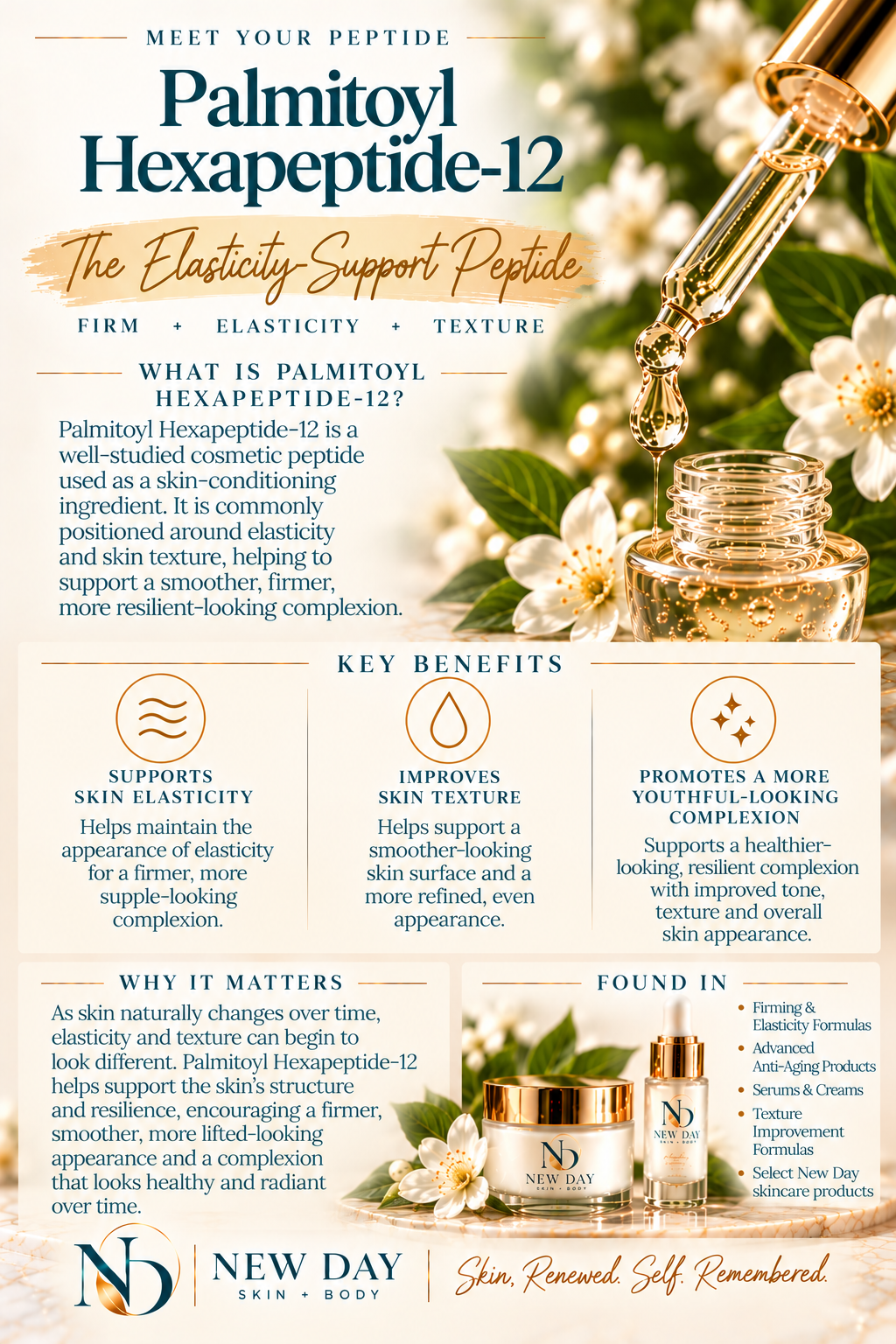
The Elasticity-Support Peptide
Firm • Condition • Smooth
Palmitoyl Hexapeptide-12 is a synthetic cosmetic peptide commonly positioned around skin texture and elasticity.
It is used as a skin-conditioning ingredient in certain age-support formulations.
Why it's used:
Supports formulations focused on elasticity.
Is included in products targeting smoother-looking skin.
Contributes to skin-conditioning and texture-focused products.
Why it matters: As skin changes over time, its texture, flexibility, and appearance can change as well.
Palmitoyl Hexapeptide-12 is one of several cosmetic peptides developed for formulations addressing these concerns.
How Do You Know Which Peptides Your Skin Needs?
After learning about fifteen different peptides, you might be wondering whether you should be using all of them.
Absolutely not.
And that's one of the most important lessons I want you to take away.
More peptides do not automatically mean better skincare.
A longer ingredient list doesn't guarantee better results.
And the most expensive formula isn't necessarily the best formula for your skin.
Instead, begin with what you're actually trying to support.
If your concern is fine lines and expression lines, you may want to learn more about ingredients such as Acetyl Hexapeptide-8, SNAP-8, Syn-Ake, and Palmitoyl Pentapeptide-4.
If firmness and elasticity are your priorities, peptides such as Palmitoyl Tripeptide-5, Palmitoyl Tripeptide-1, Palmitoyl Tripeptide-38, and Palmitoyl Hexapeptide-12 may be of interest.
If you're interested in skin renewal and resilience, GHK-Cu and Tripeptide-1 are worth understanding.
If sensitive skin is your primary concern, the research and cosmetic applications surrounding Acetyl Tetrapeptide-15, Palmitoyl Tripeptide-8, and Acetyl Hexapeptide-49 may be relevant.
And if your focus is the eye area, Acetyl Tetrapeptide-5 is one ingredient commonly used in products targeting the appearance of puffiness.
These are ingredient categories to explore—not guarantees of individual results or proof that any particular product will suit your skin.
What Peptides Cannot Replace
I love the science behind advanced skincare, but I never want women to believe that one ingredient can do everything.
Peptides don't replace the importance of a gentle cleanser, adequate moisturization, sun protection, or a routine you can realistically maintain.
They also cannot replace professional evaluation of persistent irritation, unexplained swelling, or other skin concerns that may require medical attention.
A well-formulated peptide product can be a thoughtful addition to a skincare routine.
But a thoughtful routine is still more important than collecting impressive ingredients.
And consistency often matters more than complexity.
The New Day Philosophy: Science With Purpose
The reason I'm passionate about peptide education isn't simply because these ingredients are fascinating.
It's because I believe women deserve to understand the products they're choosing.
I want you to know what an ingredient is.
Why it's included.
What researchers are studying.
What the evidence actually supports.
And just as importantly, what we still don't know.
Because skincare education should build confidence, not confusion.
At New Day Skin + Body, our philosophy is rooted in three things:
SCIENCE + SELF-CARE + REAL LIFE.
Science gives us ingredients to investigate.
Self-care reminds us why we use them.
And real life reminds us that a skincare routine must fit the woman living it.
Some days, that might mean carefully layering your favorite serum and moisturizer.
Other days, it might mean cleansing, moisturizing, and getting out the door.
Both count.
And neither requires perfection.
Your Skin. Your Season. Your New Day.
Skin changes.
Our priorities change.
Our routines change.
And sometimes, the most empowering thing we can do is stop chasing every new skincare trend and begin understanding what our own skin actually needs.
That's the heart of New Day.
We aren't here to make women afraid of aging.
We're here to celebrate informed choices, thoughtful formulations, beautiful self-care, and the confidence that comes from understanding your skin.
Because the goal was never to own the most products.
The goal is to have the right products—and understand why you're using them.
Welcome to a more intentional approach to skincare.
Welcome to your New Day.
NEW DAY SKIN + BODY
Skin, Renewed. Self, Remembered.
Explore New Day Skincare:
https://www.shiftedbeinghealth.com/shop-skincare
Educational Disclaimer
This information is provided for educational purposes regarding the biological and scientific research associated with the ingredients listed. It is not intended to diagnose, treat, cure, or prevent disease or to provide individualized medical advice.