
Copper Peptides in Skincare: The Science of GHK-Cu

What Are Copper Peptides?
Copper peptides are compounds formed when small chains of amino acids called peptides bind with copper ions. One of the most extensively studied copper-binding peptides in skin research is GHK-Cu, or glycyl-L-histidyl-L-lysine copper complex.
GHK occurs naturally in the human body and has been identified in biological fluids including plasma and saliva. Its ability to bind copper has made GHK-Cu an important subject of research involving cellular communication, extracellular matrix biology, tissue remodeling, and skin physiology.
In cosmetic science, GHK-Cu has attracted particular interest because many of the biological processes being investigated are also associated with the structure, resilience, and appearance of skin.
Why Is Copper Important to Skin Biology?
Copper is an essential trace element involved in numerous biological processes.
Within skin and connective tissue research, copper is particularly relevant because copper-dependent enzymes participate in processes associated with extracellular matrix formation and maintenance.
One important example is lysyl oxidase, a copper-dependent enzyme involved in the cross-linking of collagen and elastin.
Researchers therefore study copper not simply as a mineral, but as part of the complex biochemical environment involved in maintaining connective tissue structure.
Peptides such as GHK can bind copper and participate in its biological transport and signaling, which is one reason GHK-Cu has received significant scientific attention.
GHK-Cu and Cellular Communication
Modern skincare science extends far beyond simply adding moisture to the surface of the skin.
Researchers increasingly study the signaling mechanisms that allow skin cells to communicate with one another and respond to their surrounding environment.
GHK-Cu has been investigated in relation to several of these processes, including:
Cellular signaling
Extracellular matrix remodeling
Collagen biology
Elastin biology
Copper transport
Fibroblast activity
Tissue homeostasis
Cellular responses to oxidative stress
These areas of research help scientists understand how skin maintains its structural organization over time.
GHK-Cu and Collagen Research
Collagen is one of the primary structural proteins within the skin's extracellular matrix.
As skin ages, changes occur in collagen production, organization, and degradation. For this reason, collagen biology is one of the central areas of cosmetic and dermatological research.
GHK-Cu has been investigated for its relationship with biological pathways associated with collagen synthesis and extracellular matrix remodeling.
This does not mean that applying a copper peptide cosmetic product simply "replaces collagen." Instead, researchers are interested in the signaling environment surrounding the cells responsible for maintaining the extracellular matrix.
This distinction is important when discussing peptide skincare accurately.
GHK-Cu and Elastin
Elastin is another important component of the extracellular matrix and contributes to the skin's elastic properties.
Copper-dependent biological processes participate in the formation and organization of both collagen and elastin.
Researchers therefore continue to investigate GHK-Cu and copper biology as part of the broader scientific study of skin structure, resilience, and tissue maintenance.
GHK-Cu and Fibroblast Research
Fibroblasts are specialized cells located within connective tissue.
They play an important role in producing components of the extracellular matrix, including collagen and other structural molecules.
Because fibroblasts are central to skin structure, they are frequently studied in cosmetic peptide research.
Laboratory investigations of GHK-Cu have examined its interactions with fibroblast activity and extracellular matrix-related signaling, contributing to the scientific interest surrounding copper peptides in advanced skincare formulations.
Why Are Some Copper Peptide Products Blue?
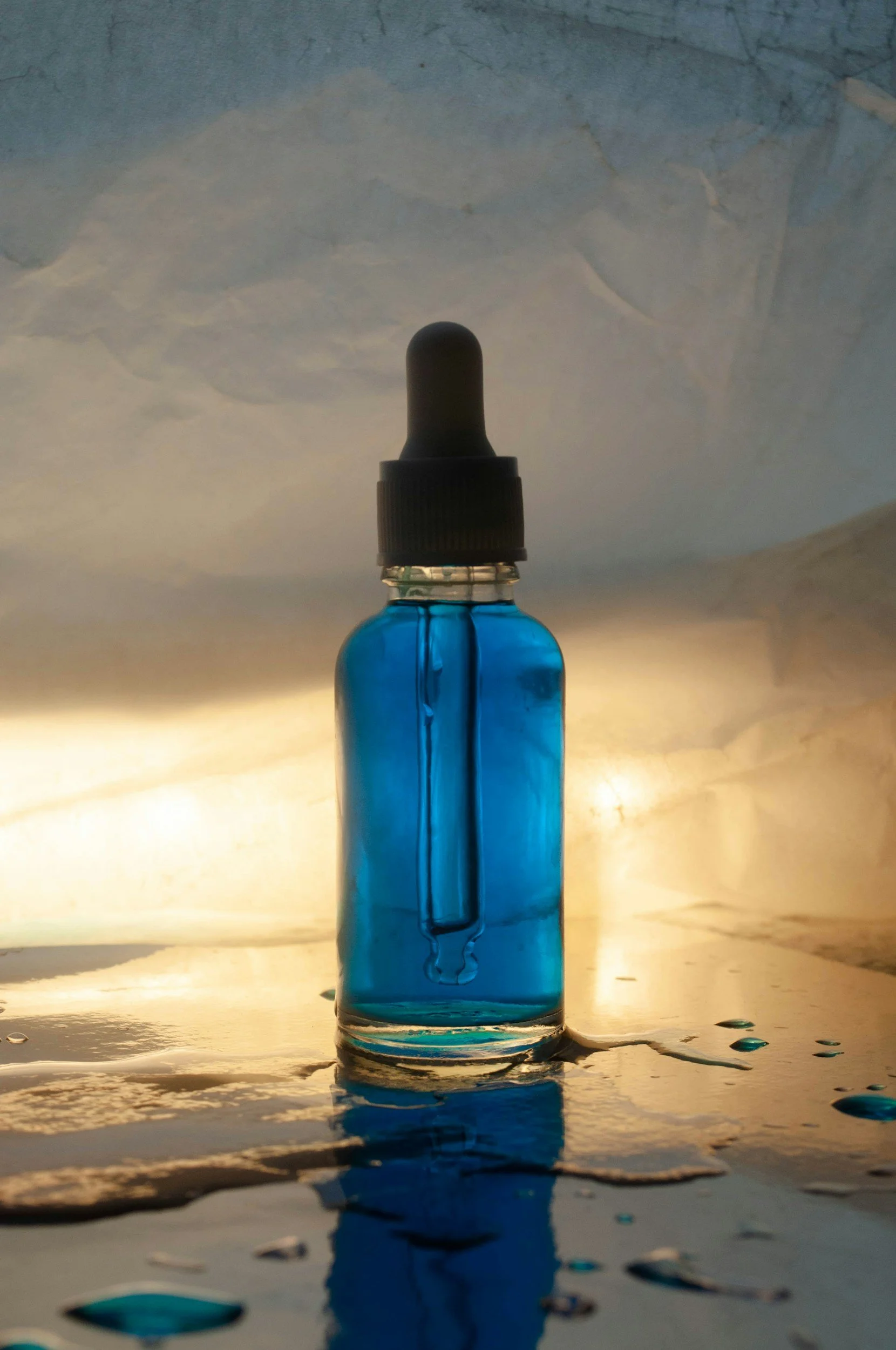
One of the most recognizable characteristics of GHK-Cu is its distinctive blue coloration.
When GHK binds copper ions, the resulting copper complex can produce a blue or blue-violet appearance.
Therefore, the blue color seen in some authentic copper peptide formulations may originate from the copper-peptide complex itself rather than from an added cosmetic dye.
The final color of a skincare product can still vary depending on concentration, formulation, and the other ingredients present.
Why Are Copper Peptides Used in Skincare?
Copper peptides are incorporated into cosmetic formulations designed to support the appearance of healthy, resilient skin.
Depending upon the complete formulation, copper peptide skincare may be selected by consumers concerned with the visible appearance of:
Fine lines
Loss of firmness
Uneven-looking texture
Dullness
Mature-looking skin
Overall skin vitality
It is important to distinguish between biological research involving GHK-Cu and the claims that can appropriately be made about a finished cosmetic product. Research into a molecule does not automatically establish that every topical formulation containing that molecule will produce the same biological effects.
Formulation, concentration, stability, delivery, accompanying ingredients, and actual product testing all matter.
Copper Peptides and Advanced Skincare Formulation
A well-designed skincare formula is more than a collection of individual ingredients.
Cosmetic scientists must consider factors such as:
Ingredient stability
Concentration
pH
Compatibility
Delivery
Packaging
Interactions among ingredients
This is particularly important with advanced peptide formulations.
Rather than evaluating a product based solely on whether "copper peptides" appear on the ingredient list, consumers should consider the complete formulation and how the product fits within the rest of their skincare routine.
Where Do Copper Peptides Fit Into a Skincare Routine?
The appropriate layering order depends on the specific formulations being used.
A straightforward routine might include:
Cleanse → Hydrating Toner → Copper Peptide Serum → Moisturizer → SPF in the morning
When multiple active skincare products are being used, introducing them thoughtfully can make the routine easier to evaluate and tolerate.
GHK-Cu vs. Matrixyl vs. SNAP-8
Not all cosmetic peptides are designed around the same research concept.
GHK-Cu is studied extensively in relation to copper transport, extracellular matrix biology, cellular signaling, and skin remodeling.
Matrixyl peptides are cosmetic signal peptides studied primarily in relation to extracellular matrix and collagen-support pathways.
SNAP-8 (Acetyl Octapeptide-3) is a synthetic cosmetic peptide developed around a different signaling concept and is commonly used in formulations intended to improve the visible appearance of expression-related lines.
This is why sophisticated skincare formulations may contain different peptide technologies rather than relying on a single peptide to perform every role.
The Bigger Picture: Peptides and Skin Science
Copper peptides demonstrate an important principle of modern skincare:
Healthy-looking skin is influenced by far more than hydration alone.
Skin is a living organ supported by an extraordinarily complex network of cells, structural proteins, enzymes, signaling molecules, lipids, antioxidants, and extracellular matrix components.
Peptide research gives scientists another way to investigate that communication.
GHK-Cu is especially fascinating because it connects several areas of research—peptide signaling, copper biology, extracellular matrix science, and cosmetic formulation—within one small molecular complex.
That intersection is what has made copper peptides such an enduring subject of advanced skin research.
Explore the Research
For additional peer-reviewed scientific literature, search PubMed using terms including:
GHK-Cu
Copper peptide GHK-Cu
GHK-Cu skin
GHK copper collagen
Copper peptide fibroblast
Part of the Shifted Being Peptide Science Library
Exploring the science of cellular communication, peptide biology, and emerging areas of biomedical research.
Educational Disclaimer
This article is provided for educational purposes and discusses scientific research involving peptide and skin biology. It is not intended to diagnose, treat, cure, or prevent any disease and should not be interpreted as medical advice.Discussion of research involving an individual ingredient should not be interpreted as establishing the efficacy of a particular finished cosmetic product. Cosmetic product performance depends upon the complete formulation and its intended use.